The House of Lords – a modern anachronism?

The UK is unique in having a largely appointed second chamber. How can it help you to influence the policy agenda?

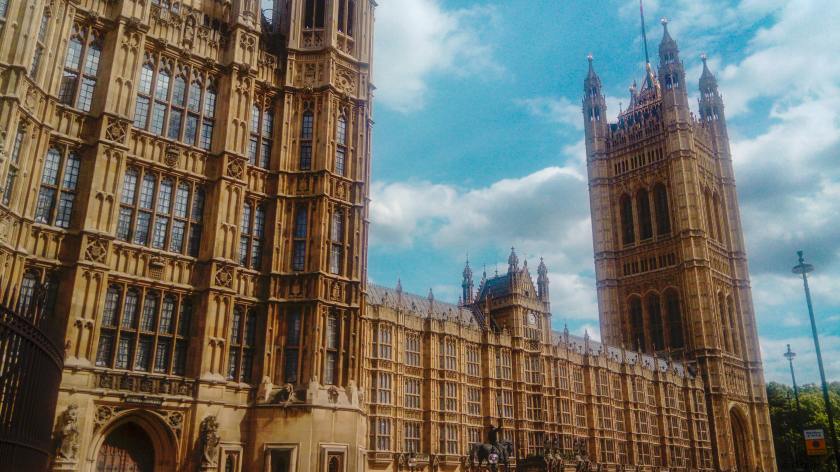
Photo by Peter Kostov on Unsplash

We’re often told that the UK is the trailblazer of parliamentary democracy – a model which has been emulated the world over, and which provides for stable government.  Whether or not that is the case, there is one quirk of the UK model which hasn’t proved to be quite such a popular export, and that is the role of an appointed House of Lords within our bi-cameral system.

While our model of a largely appointed second chamber might be highly unusual (and almost unique when you factor in the remaining hereditary element of the House of Lords), it is an important part of our parliamentary system, and one that anyone seeking to influence the policy process would be foolish to overlook.

In this post, I look at the role that the House of Lords plays in the policy process and offer some tips on how to make best use of the second chamber as part of your influencing strategy.  

The shape of the House of Lords

The House of Lords is one of the largest upper houses of parliament anywhere in the world and is famously second only in size to the Chinese National People’s Congress.

In 2015, there were more than 800 active members of the House of Lords (yet only enough seats for 400!).  While historically most Peers were hereditary, today the vast majority are life peers, appointed to the House by successive Prime Ministers and other party leaders. Other peers are a mix of bishops and hereditary peers (whose number has been dramatically reduced in recent rounds of reform). 

On the Government benches, there are House of Lords ministers representing Departments of State, and many members take a party whip.  However, unlike its democratic counterpart, the House of Lords has many crossbench peers – members of the House of Lords who are not politically aligned.  Cross bench peers tend to be subject-matter experts, appointed to the House of Lords because of their special interests or contribution to national life.

Controversies

In any discussion about the House of Lords, it is impossible to ignore the highly controversial nature of the existence of a largely appointed second chamber in a modern democracy.  Quite apart from the big question-mark over the lack of direct (or even indirect) election to the second chamber, the UK system is also unique in having representatives of the established church playing a role in the legislative process.  Add to that the continued presence of an (albeit much reduced) hereditary element, and the role that the Prime Minister (and other party leaders) play in appointing members of the House of Lords (leading to accusations of cronyism), and it’s easy to see why many people might consider the House of Lords to have had its day.  

Reform of the House of Lords

The House of Lords has been under almost constant reform.  Aside from the big constitutional changes brought about by the Parliament Acts, there have been a constant stream of smaller, but equally significant, reforms over the years.  

Its shape has been significantly amended in the last 100 years.  The Life Peerages Act of 1958 precipitated the transition from a largely hereditary chamber to an appointed one, and the 1999 House of Lords Act removed all but 92 of the remaining hereditary peers.

Most recently, under the Conservative-Liberal Democrat Coalition Government of 2010, proposals were drawn up which would have capped the size of the House of Lords and introduce direct elections for 80 per cent of the members of the Lords.  Those proposals were swiftly dropped by the Coalition Government in the face of opposition from the Conservative Party. But the question of Lords reform remains high on the constitutional reform to-do list.  

However, the purpose of this post is not to rehearse the arguments for and against reform of the House of Lords, but to focus on the role that it plays in the policy process, and therefore its importance for anyone seeking to influence the development of government policy. 

The role that the House of Lords plays

Until the passing of the 1911 Parliament Act, the House of Lords held enormous power, and was able to veto any legislation that had been passed by the democratically elected House of Commons.  The 1911 Act was one of the most important changes to the (notoriously unwritten) British Constitution and marked the transition of the House of Lords from equal partner in the parliamentary system to a chamber of review and reflection. Today, the House of Lords can only, at best, delay legislation sent to it from the House of Commons, and even then in relatively limited circumstances and only for up to a year.  Its powers have been significantly curtailed over the last century. 

Today, it is a chamber that seeks to hold government to account, and which seeks to influence government policy.  It can no longer simply block legislation but can give the government of the day pause for thought if there is significant opposition from Peers. Perhaps the best example of that was the Labour administration withdrawing its plans to introduce mandatory identification cards in the face of opposition from the House of Lords in 2006.  

The Salisbury Convention means that traditionally the House of Lords does not seek to block or delay legislation that was included in the manifesto of the government of the day, given that such legislation has a direct mandate from the electorate.  By convention, the Lords are also not able to block or delay any bill relating to finance or taxation.   

The soft power of the House of Lords

So rather than relying on the hard power of parliamentary process, the House of Lords often seeks to use soft power.  Through close inspection, review, and challenge, it seeks to help shape and influence the development of policy, and the decisions that the government takes. 

In many ways, members of the House of Lords play quite a similar role to those of us outside of the parliamentary system who are looking for ways to influence the policy process. 

Working with members of the House of Lords

Working with members of the House of Lords is quite different to working with members of the House of Commons.  Here are a few tips and tricks to help you make best use of the House of Lords as a route to influencing government policy.

Tip #1:  They don’t have to worry about troublesome elections!

Compared to elected parliamentarians, members of the Lords don’t have to think about how electorally popular they might be.  This means that they can be more likely to speak up and be vocal on matters of principle which are important to them compared to their elected counterparts.  It’s a curious advantage of not being democratically elected. 

Tip #2:  There is more time for debate 

Debates in the Lords tend to be longer and deeper than those in the Commons.  This means that it is easier to communicate nuance and subtlety than it is in the Commons, which can be particularly helpful when the issue that you are trying to influence or communicate is complicated. There are some parallels with Commons debates in Westminster Hall in that regard.  

Tip #3:  It’s easier for the Lords to challenge the government

Partly because the House of Lords effectively has ‘no overall control’ as the government benches do not command a majority, it is quite common for the House of Lords to table (and support) amendments to Government legislation that would be unthinkable in the Commons.  Although such amendments often go on to be overturned by the Commons, it can be a really powerful way of raising the profile of a particular issue. Sometimes, the government will listen to the voices of Peers, and accept such amendments too. 

Tip #4:  They don’t have staff

One important difference between members of the House of Commons compared to members of the House of Lords is that Peer frequently won’t have the staffing capacity that their elected counterparts have (both in their constituencies and in their Common’s offices).  This is important to bear in mind when you’re working with Peers.  It means that you’re much more likely to be dealing directly with the Peer themselves, rather than any staff.  It also means that building a positive and constructive working relationship is even more important, and you will need to think carefully about what they might need in terms of support or briefings.  

Tip #5:  They are often subject matter experts

Appointees to the House of Lords are frequently experts in their particular field, so finding the Peers with relevant interests and knowledge should be a key part of your influencing strategy.  Encouraging such experts to get involved in relevant All-Party Parliamentary Groups, for example, can be really effective. 

What is your experience of working with members of the House of Lords? Have they been a valuable route to influence government policy?  Share your thoughts in the comments below.

If you or your organisation are looking to do more policy influencing work, and would like some help or advice, I’d be happy to have a chat. Just drop me a line via the ‘Contact’ link above, or email me at hello@thepolicycoach.co.uk  

How to write a great parliamentary briefing

Writing persuasive briefings for MPs and Peers is a really effective way of getting your message across. How do you write a briefing that’s going to get noticed?

Photo by Kaitlyn Baker on Unsplash

In my previous post, I discussed the value of Westminster Hall debates as a place where more considered and thoughtful debate can take place compared to the floor of the House of Commons.  But whether it’s a debate in Westminster Hall, in the main Commons chamber or in the House of Lords, you’re going to need to be able to brief parliamentarians effectively.

A good written briefing is vital if you want your voice and your messages to come across in any debate.  In this post, I offer some top tips on how to prepare a parliamentary briefing.

There are two main reasons why you might choose to brief parliamentarians ahead of a debate.  Firstly, you may want them to understand a particularly complex issue which they may not have come across before. Secondly, you may want to try to encourage them to take your messages in to the debate.  In reality, these are, of course, not mutually exclusive, and in most instances, there will be an element of both education and promotion to any briefing that you produce.  

While this post is written with a Westminster audience in mind, the same principles apply to briefing MS’s in Wales, MSP’s in Scotland or MLA’s in Northern Ireland. 

Tip 1:  Decide who you want to brief

One of the first decisions that you will need to make is who you want to brief.  Are you planning to brief all MPs (or Peers for a debate in the House of Lords), or just a sub-set?   You might, for example, only want to brief those MPs or Peers who are particularly close to your cause, such as through their engagement with an All-Party Parliamentary Group.  The advantage of this approach is that they are likely to need less education than a wider group of parliamentarians, as they are likely to be closer to the issues than most.  If you choose to brief a wider pool of parliamentarians, you’re likely to need to include a bit more by way of background and detail.  Deciding who you want to brief will therefore shape the document that you put together. 

Tip 2:   Use good evidence

As described in a previous post, evidence is king.  Whether that is hard data or people’s stories, adding good evidence to your briefing will go a long way. It will help to make your briefing useful to parliamentarians – giving them insight, evidence, and data that they might otherwise struggle to find.   

Tip 3:  Make it useful

The purpose of putting a briefing together for a debate is to be helpful to parliamentarians.  You want them to find the content of your briefing useful.  All of us are more likely to feel more positive towards something that is helpful than to something that is lecturing in tone, for example.  

Tip 4: Less is more

While there might be a huge temptation to provide a lot of unnecessary detail, it’s really important to keep your briefing as concise as possible.  It’s not an easy balance to strike, but a briefing that is too long simply won’t get read or absorbed.  As a general rule of thumb, I normally aim for no more than 4 sides of A4, and ideally less if you possibly can. 

Tip 5:  Think about speaking points

It’s important to remember that a parliamentarian is going to use the information that you share to inform what they will say on the floor of the House.  As you put your briefing together, think about the specific speaking points that an MP or Peer might be looking for, and present the information in such a way that it makes it easy for them to extract that.  I have always found that putting a clear statement down on paper followed by a two or three sentence explanation works quite well.  You might even want to put the statements in bold to make it clear that these are your critical points. 

Tip 6:  Be specific

It’s important to be as specific and precise as possible, especially if your briefing is to inform debate on legislation (which won’t always be the case).  Where possible, refer to specific clauses of the Bill being debated.  This is particularly important when a Bill enters its committee stage (even more so if it is being handled by a committee of the whole house), as debate is often scheduled around specific clauses. 

Tip 7:  Make it personal and local

If you have the resource and capacity, it’s even better if you can personalise briefings for specific MPs.  Do you have constituency data or evidence?  If so, use it!  It’ll make it much more likely that they will use your briefing as it will help them to raise a constituency perspective.  

Tip 8: Don’t forget the politics

As I mentioned in a previous post, it’s important to remember that politics is inherently a partisan business.  While most organisations will want to maintain a neutral position, that doesn’t mean that you shouldn’t be sensitive to different political viewpoints.  If your resource and capacity allows, it can be really effective to think about tailoring your briefings for MPs from different political parties.  That doesn’t mean that you should change the essence of what you might want to say, but it does mean that you might want to think about contextualising your messages in a slightly different way.  In reality, you won’t always have the luxury of time or resource to be able to do this.  If that’s the case, try to avoid falling into the trap of presenting your arguments in such a way that might completely turn off MPs from one or more party.  

Tip 9:  Present solutions

As I have mentioned in previous posts, it’s really important that your briefing is positive and solution focused.  While you need to set out your case for change, you also need to offer up some solutions and recommendations.  Any MP or Peer speaking in a debate is going to want to make positive suggestions for change.  Your briefing can be a vehicle for making those suggestions.  

Tip 10:  Don’t forget a point of contact

It seems such an obvious thing to say, but don’t forget to include a point of contact in your briefing.  One of the long-term benefits of producing briefings for MPs and Peers is building relationships with them and their parliamentary staff.  As you build that relationship, they will be more likely to come to you proactively for advice and guidance on key issues.  Without a named contact, building that relationship is so much harder. 

What would you add to this list of tips?  Share your thoughts in the comments below.

If you or your organisation are looking to do more policy influencing work, and would like some pro bono advice, I’d be happy to have a chat. Just drop me a line via the ‘Contact’ link above, or email me at hello@thepolicycoach.co.uk


Westminster Hall – the unsung hero of parliamentary debates

Westminster Hall is one of the most historic parts of the Parliamentary Estate – and in policy influencing terms, it’s home to some of the most valuable debates too.

Photo by Ali Kokab on Unsplash

When most people think about debates in Parliament, they often think of the cut and thrust of debate in the House of Commons chamber.  But there is another type of debate that happens on days when Parliament is sitting.  And those debates can be a really effective way to raise an issue and get a response from a government minister. 

What are Westminster Hall debates?

Westminster Hall is one of my favourite parts of the Parliamentary estate – steeped in so much history and national significance.  At the time of writing this post, it is currently also the location in which Her Late Majesty Queen Elizabeth II is lying-in-state. 

However, despite their name, Westminster Hall debates don’t actually take place in the historic Westminster Hall, but in the Grand Committee Room just off Westminster Hall.  

Compared to debates in the main chamber, Westminster Hall debates have the huge advantage that they have more time available to delve into an issue in more detail than is normally possible elsewhere.  They are also less combative in tone compared to debates in the main chamber, allowing a more nuanced debate to take place.  This makes them a really effective vehicle for organisations seeking to influence the policy agenda to give their issue some meaningful airtime. 

The format of a Westminster Hall debate

In a similar way to Early Day Motions, the motion for debate in a Westminster Hall debate is presented as a neutral statement – beginning ‘That this House has considered…’.  Debate topics can either be local or national issues.  

How topics are selected

Debates in Westminster Hall can be on a variety of topics.  Any MP can request a debate in Westminster Hall, and debates are selected in a variety of ways, according to the Parliament’s Standing Orders.  Some debate topics are drawn from the petitions that the public can choose to support (for debates on Mondays).  Other debate topics may be selected by a ballot arranged by the Speaker’s office (for debates on Tuesdays and Wednesdays), while the Backbench Business Committee will select debates on Thursdays. 

Work with a supportive MP

Westminster Hall debates are a really good way for individual MPs to raise issues that they are particularly passionate about.  

If your organisation wants to see a debate in Westminster Hall on a particular issue, you’ll first need to approach a supportive MP that you have a good relationship with.  You may have developed that relationship through an All-Party Parliamentary Group, via their support for an Early Day Motion, as part of your public affairs strategy to identify parliamentarians who are sympathetic to your cause, or, of course, at a constituency level.  

They will probably ask you to help their parliamentary staff to draft the motion for debate.  Once that is done, they will submit it through the appropriate channel.  It’s then a case of waiting to see if their motion is selected for debate.

Prepare good briefings

If and when the motion is selected for debate, you’ll need to produce some good briefing materials for the sponsor of the debate, and for other MPs who might take part.  

At this point, some people make the mistake of using the same briefing document for the debate sponsor and for other MPs.  In my opinion, it is good practice to offer the sponsor a more detailed background briefing with some unique points for them to raise.  

The briefing should summarise the key issues, outline what you think should change, and offer up some key speaking points.  (I’ll return to the question of what makes a good parliamentary briefing in a future post.) 

Encourage MPs to take part

You will also want to encourage other MPs to take part in the debate – after all, it won’t be much of a debate if only a few people turn up!  It’s a really simple and effective call to action to ask MPs to take part in Westminster Hall debates.  If you’ve got supporters and campaigners at constituency level, they can also ask their local MP to take part too, which will also help give them some relevant constituency perspective too. 

The debate itself

The length of a Westminster Hall debate will depend on the topic for debate.  Typically, for a debate on a national issue where there may be a lot of MPs keen to speak, the debate can last for an hour and a half.  For debates on local issues, the debates normally last for 30 minutes. 

MPs speaking in Westminster Hall debates are normally eager to bring local perspectives – reflecting what they are seeing or hearing in their constituency.  

In my opinion, debates in Westminster Hall tend to be more thoughtful and reflective than debates in the main chamber, making them ideally suited for more complex issues and topics. 

The government’s response

All debates in Westminster Hall end with a reasonably detailed response from the relevant government minister.  This is one of the things that makes Westminster Hall debates such a useful influencing tool.  The Minister will have had to have been briefed on the topic, which means that their officials will have had to do their research.  If you’re fortunate to have a good relationship with the officials, this can add significant value.  

Having a formal government response on record is incredibly valuable.  It gives you a solid foundation on which to follow up with relevant officials, especially where the government may have committed to take specific steps. 

A valuable influencing tool

Westminster Hall debates are, in my opinion, an unsung hero of Parliamentary process in the policy influencing world.  They provide space both for meaningful discussion of complex topics and local constituency issues which would be hard to find elsewhere.  They are a fantastic way to build relationships with MPs – either as potential sponsors or debate participants.  And with a formal government response on record, they provide a really valuable platform for any organisation trying to shape the policy agenda. 

What is your experience of Westminster Hall debates?  Share your comments below.  

If your organisation is looking to do more policy influencing work, and would like some pro bono advice, I’d be happy to have a chat. Just drop me a line.

Early Day Motions – parliamentary graffiti, or a useful influencing tool?

Early Day Motions are a way for backbench MPs to raise an issue. Are they an effective tool for influence, or just background noise?

Photo by Andreas Fickl on Unsplash

Among the mechanisms available for backbench MPs to make their voices heard are Early Day Motions.  In this post, I’ll take a look at what they are, and how they are sometimes used (and misused) as a policy influencing tool. 

What are Early Day Motions?

Early Day Motions (or EDMs) are a way for backbench MPs to propose an issue for debate in the House of Commons.  Their ‘Early Day’ title means that there is no day yet set aside for debate, and the request is that the motion gets debated on an ‘early day’.  In reality, very few EDMs actually ever get debated in the Commons chamber.  

They have a strange format

Early Day Motions have a very peculiar format.  They need a short descriptive title, followed by a single sentence of no more than 250 words, which must begin with the phrase ‘That this House…”.  The sentence will then normally continue with a statement of support, regret, disappointment, welcome etc. What this means in reality is that those tasked with crafting text for an EDM will end up making prolific use of semi-colons as a way of packing in as much content as possible!  Having drafted several proposed EDMs over the years, I know that putting them together is a real art!  

EDMs as party political or cross-party tools

Some EDMs are used to make party political points – either in support of government policy or position, or opposed to it.  These motions will be drafted in such a way that only MPs from a particular party or persuasion are likely to support it.  They may start with a statement of either support or regret for action that the government has or has not taken, for example. These EDMs are, in my view, the very least useful to engage with as a tool for influence as their primary purpose is political point-scoring. 

Other EDMs will often be so niche or local that they will only ever get the support of one or two MPs.  They may be celebrating a local development, for example.  This is one of the reasons that the EDM system is often criticised.

In contrast, some EDMs will be written in such a way to maximise the likelihood of cross-party support.  From an influencing perspective, these are the most useful, as they can demonstrate a sense of cross-party consensus on a particular topic which is harder to dismiss than a motion which is overtly political in nature.  These are also the EDMs that are most likely to get the highest number of signatories.

It’s worth noting that ministers, whips, and parliamentary private secretaries do not normally sign EDMs, and the Speaker and Deputy Speakers will never sign EDMs as they need to maintain their impartiality. 

How much do they cost? 

While there is no direct charge for EDMs, there is a cost to the taxpayer, and the system costs Parliament a substantial sum of money.  This is another reason that the EDM system is frequently criticised. In answer to a Freedom of Information request in September 2016, the Parliamentary authorities clarified that a total of £400,000 had been spent on the system in the 16 months since the May 2015 election.  When you stop to think that there are, in an average year, over 1,200 EDMs that are tabled, it’s easy to see how those costs quickly mount up.  On my very back of an envelope calculation, it puts the average cost of each EDM at around £250. 

Are they effective?

The answer to this question depends largely on what you want to achieve.  If your goal is to raise awareness of an issue, or to be able to demonstrate (particularly cross-party) support, then they can be a useful tool.  I suspect that this is why they are commonly used to mark awareness weeks and other similar events.  And as a building block for an emerging public affairs strategy, they can be a useful way of working out which backbench MPs might be open to a further conversation about the issue that is important to you. 

If, however, your goal is policy influence and change, then I don’t think that Early Day Motions are particularly useful. Very few get debated, and most get disregarded.  There are other more effective tactics that you can deploy.  

On balance, I am deeply sceptical about the value of Early Day Motions as a route to policy influence.  While I can understand their appeal, as a tool that it is relatively easy to use and to be able to ‘demonstrate’ MP support for an issue, their overall impact is marginal at best.  

They have received quite a lot of criticism over the years, not just on the basis of their cost to the taxpayer.  They have famously been described as ‘parliamentary graffiti’

They can often be seen as a vehicle for external organisations and interest groups to be seen to be ‘doing something’.  For campaign groups, it’s tempting low-hanging fruit to go for an easy way to ‘quantify’ the support of parliamentarians to your cause.  

Using an EDM as an influencing tool

If you think that an EDM could be a useful way of raising an issue of importance to you and your organisation, the first step will be to find a supportive MP who would be prepared to table the motion.  If you have a good existing relationship with either a local MP or an MP who has supported your cause (such as through your engagement with an All-Party Parliamentary Group), this is normally a good place to start.  They will often ask you to help draft the motion and to work with their parliamentary staff to finalise the wording.  

If you’re looking for good cross-party support, it’s a good idea at this point to also line up MPs from other parties to be co-signatories to the motion.  The first six signatories will be the sponsors of the motion, so a cross-party spread of those initial signatures will be more likely to encourage other MPs to sign up too. 

Once the motion has been tabled by the MPs office, it remains open for signatures for the remainder of the parliamentary session.  As you build relationships with MPs from across the Commons, asking them to sign the EDM can be an easy and straightforward ask to get them involved.  

Are they worth the effort?

While I remain sceptical about the value of EDMs, they do have a role to play.  They can be a simple way to generate some cross-party support for an issue, and can be a good way for an organisation to build relationships with MPs.  As a tool for influencing policy however, they are not effective.  Very few EDMs are ever debated on the floor of the House, and even fewer have any meaningful effect on the policy agenda. 

What is your experience of Early Day Motions? Share your thoughts in the comments below. 

If your organisation is looking to do more policy influencing work, and would like some pro bono advice, I’d be happy to have a chat. Just drop me a line.

When a new Prime Minister arrives

With an new incoming Prime Minister, the most important question facing policy and public affairs professionals is how on earth to get cut through on the issues that matter most to you

Photo by Rui Chamberlain on Unsplash

As the Conservative leadership contest draws to a close, like almost every policy or public affairs person across the UK, I’ve spent the last few weeks and months thinking about the best strategies for approaching a new incoming Prime Minister. 

I’ll resist the temptation to talk about my views on the strengths and weaknesses of the process that we’ve all witnessed for the election of a new Conservative Party leader, and therefore Prime Minister, over the last two months (tempting as that might be!), and focus instead on how on earth you prepare for a new administration. 

In normal times (which have been in short supply in the last few years), government leadership changes as a result of a general election.  More recently, and definitely since Tony Blair left Number 10, the ‘new normal’ has been for new Prime Ministers to be selected not by popular vote, but by individual party procedures.  Policy and public affairs professionals have had a lot of experience of that recently.

So, the most important question to ask is how on earth can you try to get cut through on your priorities when every lobby group is trying to do exactly the same thing?

I’ve been giving a lot of thought recently to this question – not least given the very challenging context that we are all working within at present.  

At the time of writing this post, I have no idea which of the two candidates for the top office of state will be successful (although if the polls are to be believed, this was a contest in name only!).  However, the fundamental questions remain the same.  What will the priorities be of the new PM? How will the machinery of Number 10 change under the new leadership? And how do you get a voice in what is already a very crowded space?

From a policy and public affairs perspective, one of the upsides of a change of PM without a general election is that most of the faces will remain the same.  While we may not know the configuration of the Cabinet that the new Prime Minister might choose, they are all familiar faces and personalities.  Compared to a different party coming in to power in a general election, this is a more straightforward starting point to work from.

I’ve spent the last couple of days crafting an approach to the new Prime Minister to highlight some of the pressing issues that are important to me and the organisation that I’m involved with.  Therefore, I thought that I should share the top five things that stand out to me as the most important lessons from that. 

Tip 1:  Be relevant

With a change of government leadership, there is a huge temptation to throw everything and the kitchen sink at your first approach.  This won’t work.  It’s really important that you are responsive to the wider context in which that person will be arriving into the biggest job in the country.  What are the key issues that will be their in-tray?  And how is your issue relevant or related to that? 

Tip 2:  Offer solutions

An incoming Prime Minister will be presented with 1001 different problems that require their attention.  This incoming Prime Minister is facing the biggest cost of living crisis for a generation, a war in Europe, and the continuing shadow of the UK’s decision to leave the European Union.  In your initial approach, it’s important not to just add to the list of problems, but to offer solutions too.  If you can make your solutions appear simple, obvious and achievable, you’re much more likely to get the outcome that you are seeking.  

Tip 3: Think politically

An incoming Prime Minister wants to come with solutions.  They want to be able to answer what have been the most difficult questions that their predecessor failed to address.  When you’re thinking about that initial approach, you also need to think politically.  You might have in your mind the very best policy solution, but if it won’t work politically, it’s not going to fly.  Listen to what they are saying, understand their priorities and their world view, and you’ll be able to frame your pitch in the most positive and influential way.  With a previous change of Prime Minister, I recall pitching a solution as an easy political win that would generate some easy kudos. It worked, and led to a short-term cash injection on an issue that mattered a great deal to my key stakeholders.  

Tip 4:  Time it well

When a new Prime Minister arrives as a result of a change of government though a General Election, we’ve become very familiar with the transition of power that takes place, and the way in which that happens.  With a change of Prime Minister outside of an election cycle, the technicalities of timings matter more than ever.  In the current transition, while the new Prime Minister will be announced on Monday lunchtime, they won’t officially become new the Prime Minister until they are invited by the Queen to form a government on Tuesday.  

Tip 5:  Address any objections up front

If you’ve already got reasonably good relationships with civil servants and officials, you’ll have a pretty good idea what their advice is likely to be to the new Prime Minister in response to your suggestions.  If you can head those off at the pass, you’ll be in a much better and stronger position.  Think about the counter arguments that you can use to address such objections, and include them up front in your initial approach to the new Prime Minister

None of us quite know how the incoming occupant of Number 10 will change the way that policy influencing needs to happen.  But the one thing that we can be certain of is that it will be different.  Whether that is down to different priorities, a different Cabinet composition, or even a different culture at the heart of Government, we will all need to learn and adapt to a new reality. 

What are your thoughts on how easy it is for policy and public affairs professionals to adapt to a new style of political leadership?  Share your thoughts in the comments below. 

The ABCs of APPGs

APPGs are a curious part of the Westminster Parliament’s business, but can be a great channel to support your policy influencing work.

Photo by Mark Stuckey on Unsplash

All-Party Parliamentary Groups (APPGs) are a curious part of the Westminster Parliament’s business.  They are informal groups of MPs and Peers who come together, on a cross-party basis, on particular topics and issues.  What makes them unusual is that while they are comprised of MPs and Peers, they have no official status in Parliament.  However, for anyone seeking to influence the policy agenda, they can be a very useful way of getting your issues and concerns on the agenda. 

In this post, I’ll be looking at how APPGs can help you in influencing the policy agenda and getting your issues and concerns on the agenda.  Even though APPGs do not have an official status, they can have considerable influence.  

Although I focus on Westminster, the same principles apply to equivalent groups (known as Cross Party Groups) in both the Scottish Parliament and the Welsh Senedd, and All-Party Groups in the Northern Ireland Assembly.  

Types of APPG

There are broadly two types of APPGs in Westminster – country specific groups, and subject groups.  The subject groups cover an enormous range of interests, ranging from the Eurovision Song Contest to War Crimes, and everything in between.  You can access an up to date list of APPGs on the Parliament website.   

There is also a wide variety in what the groups do and how they operate.  Some are focused on serious policy discussion and influence, while others are much less formal and are arguably more like social groups for parliamentarians. 

For anyone trying to influence the policy agenda, there are broadly two main ways that you can work with APPGs.  The first is to provide the secretariat for a group close to your interests, and the second is to engage with APPGs as a stakeholder. 

Providing the secretariat to an APPG

APPGs often outsource the support and coordination of their work to other organisations.  If you have the capacity, offering to provide the secretariat for a group can be a really effective way of supporting the work of the group.  

If you are fortunate enough to be appointed as a group’s secretariat, it means that you’ll be working closely with the chair and officers (the MPs and Peers) of the group to set meeting agendas and plan the group’s activities.  Here are my top five tips for making an APPG a success in influencing policy.

Tip 1:  Make sure you’ve got a good Chair and Officers

You need a committed and effective Chair and Officers.  The officers of the group will quickly become your most engaged group of parliamentarians.  In an ideal world, you’ll want them to be open to writing letters to Ministers, tabling Parliamentary Questions and hosting Westminster Hall debates, among other things.  Invest the time and energy in building your relationship with them – it really will be the making of an effective group.  

Tip 2:  Make it active

I’ve seen so many APPGs over the years that have just ‘plodded along’ with occasional meetings which people go to out of little more than a sense of duty.  In contrast, active groups, who meet regularly and who provide lots of opportunities for wider stakeholders to get involved, are much more likely to build interest and support.  

Tip 3:  Hold interesting meetings

It seems obvious to say, but it’s really important that the meeting topics are interesting and engaging, and that they attract and engage a wider audience.  There’s little point in meetings which are only attended by the APPG officers and a handful of stakeholders.  I’ve seen so many APPG meetings over the years which effectively preach to the converted and therefore have little wider influence.  You want people to feel challenged, energised and involved from the discussions at APPG meetings, not just hearing the things that they already know or think.  Getting interesting external speakers, particularly people with lived experience, can really help with this. And don’t forget that you can invite Ministers and officials too. 

Tip 4:  Run inquiries

One of the really effective ways that APPGs can have an impact on the policy agenda is to run inquiries. Running an inquiry in which stakeholders are invited to submit written evidence, and where the APPG can hold oral evidence sessions (a bit like a Select Committee would) can be a really effective influencing tool.  Publishing a report from the inquiry with recommendations carries some weight, and can be a really impactful way of influencing.  Sometimes, such APPG reports can even generate media interest – something worth talking to your media and comms colleagues about.  It’s important to note, of course, that supporting such inquiries and producing reports can be quite time and labour intensive, so you’ll need to think carefully about your capacity to do so, and be quite targeted in how you use this approach. 

Tip 5:  Don’t forget the admin!

Even though they have no official status in Parliament, there are very strict Parliamentary rules about how APPGs must be set up, registered and run.  As the secretariat for the group, it’s your job to work with the Chair to make sure that the APPG stays within the rules with regard to meetings and activities, and the necessary reporting.  It’s all too easy to slip up and find yourself on the receiving end of a telling off!  Serious breaches of the rules can even result in the APPG being de-registered.

Engaging as a stakeholder

If you’re not able to offer to provide the secretariat, or there is an existing group with an existing secretariat, all is not lost.  Engaging with APPGs as a stakeholder can also be a really effective influencing tool.  Here are some tips and tricks for how to do that effectively.

Tip 1:  Attend meetings and ask questions

All APPGs must hold regular meetings, and those are normally open to the public.  It’s well worth going along to hear more about what the group is working on.  Where appropriate, you can also ask questions – which can be a good way of highlight an issue that is important to you. 

Tip 2:  Submit evidence

Where APPGs run inquiries or reviews, they will often ask for evidence from stakeholders.  As they are not official parliamentary groups, it’s not uncommon for stakeholders to give such requests a lower priority than they might for a call for evidence from a Select Committee, for example.  However, submitting evidence can be a really good way to get your messages across, and with lower overall engagement, there’s a greater chance that your voice will be heard. 

Tip 3:  Offer speakers

APPG meetings often have external speakers on particular topics and themes at their meetings.  It can be a good idea to get in touch with the organisation providing the secretariat for the group and offering up speakers and presenters for future meetings.  

What has your experience been of APPGs (or their equivalents in the other nations)? What do you think makes for a good and effective APPG?  Let me know in the comments below.

Coming up next time:  I’ll take a look at how to use evidence to support your influencing work.